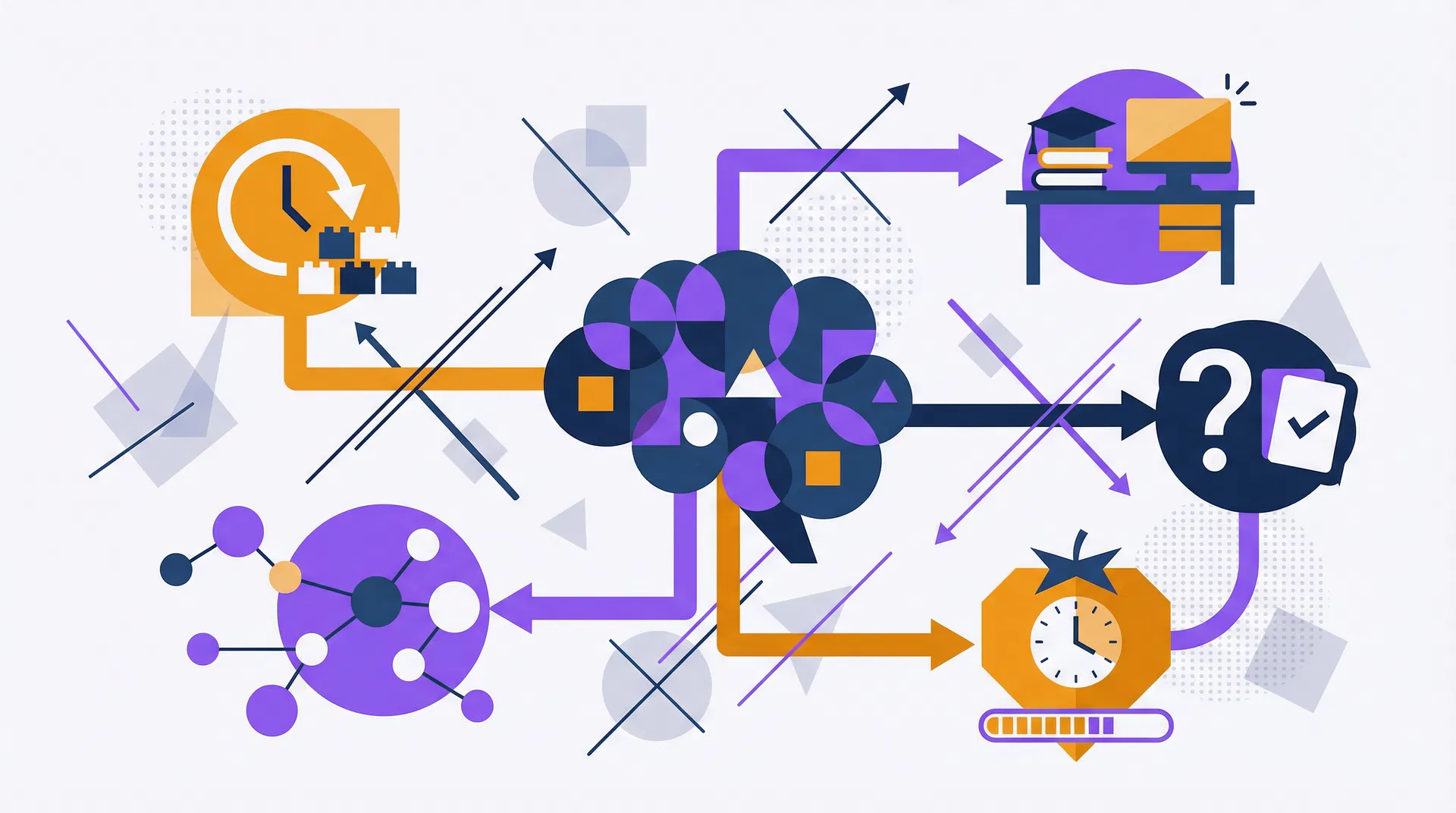
The path to becoming an industrial foreman, business administrator, or passing the AEVO exam is demanding and requires discipline. But with the right learning strategies, achieving success becomes not only attainable but also more efficient and sustainable. In this article, we present the five best learning strategies that have proven successful in practice and are recommended by successful graduates.
The Master Craftsman Exam: A Journey That Requires Good Preparation
Imagine standing at the foot of a mountain. The summit, your successfully passed master craftsman exam, seems far away. Your backpack is filled with textbooks, scripts, and the firm will to succeed. This was also the case for Michael, an aspiring industrial foreman, who faced the same challenge a few months ago. "Initially, I was overwhelmed by the sheer amount of material," he recounts. "I spent hours over books, but felt like very little was sticking."
But then Michael stumbled upon various learning methods, experimented, and found a combination that worked for him. He began to structure his learning process, consciously use breaks, and actively process the material instead of just passively consuming it. The result? He not only passed his exam but did so with top marks. His story is not an isolated case. The key to success is not to learn more, but smarter. The following five strategies will help you do just that.
1. Spaced Repetition: The Secret to Sustainable Learning
Our brain forgets information over time – this is known as the forgetting curve. The Spaced Repetition method, or "distributed repetition," addresses precisely this. Instead of intensively learning a topic once and then setting it aside, you repeat it at increasingly longer intervals. This transfers knowledge from short-term to long-term memory.
How it works in practice
Create a study plan that includes targeted repetitions. Instead of trying to memorize everything at once, spread out the learning units. A first repetition could take place after one day, the next after three days, then after a week, and so on. Digital flashcard systems like Anki or the integrated learning tools on platforms like meister.jetzt [blocked] automatically use this algorithm.
Example Learning Plan for the Topic "Cost and Performance Accounting"
| Learning Unit | Day 1 | Day 3 | Day 7 | Day 14 | Day 30 |
|---|---|---|---|---|---|
| Fundamentals of CPA | X | X | |||
| Cost Type Accounting | X | X | |||
| Cost Center Accounting | X | X | |||
| Cost Unit Accounting | X | X | |||
| Contribution Margin Accounting | X |
This method initially requires a bit more planning, but it pays off with a deep and lasting understanding of the subject matter. You build a stable foundation of knowledge instead of just cramming for the exam.
2. Active Learning: More Than Just Passive Reading
Many aspiring master craftsmen make the mistake of only passively consuming learning material. They read texts, listen to lectures, or watch videos. The problem is that the brain is hardly challenged. Active learning, on the other hand, means engaging intensively and in various ways with the content.
Methods of Active Learning
- Summaries in your own words: Instead of just highlighting texts, formulate the core content in your own words. This forces you to truly grasp the material.
- Solve case studies: Apply your theoretical knowledge to concrete practical examples. This trains the transfer thinking that is crucial in the master craftsman exam.
- Discuss in study groups: Explain a topic to others. The ability to convey complex facts understandably is the best proof that you have understood them yourself.
- Formulate questions: Develop your own exam questions about the material. This helps you to take the perspective of the examiners and identify knowledge gaps.
Imagine you are studying for "Business Administration." Instead of just memorizing the definition of "SWOT analysis," apply it to a fictional company. Analyze its strengths, weaknesses, opportunities, and threats. This active process anchors the knowledge much deeper than pure memorization.
3. The Pomodoro Technique: Focus and Breaks in Perfection
The ability to concentrate for an extended period is one of the biggest challenges in exam preparation. Distractions lurk everywhere. The Pomodoro Technique, named after a tomato-shaped kitchen timer, is a simple but extremely effective method for sharpening focus.
The principle is simple:
- Choose a task: Decide on a specific task (e.g., "Summarize Chapter 5").
- Set a timer: Set a timer for 25 minutes.
- Work with focus: Work on this one task without any distractions until the timer rings.
- Short break: Take a 5-minute break. Stand up, stretch, drink a glass of water.
- Repeat: After four "Pomodoros" (i.e., four learning units), take a longer break of 15-30 minutes.
This technique not only helps to concentrate but also prevents mental exhaustion. The regular breaks give the brain time to recover and process what has been learned. Instead of struggling through the material for hours, you work in short, highly efficient sprints. Try it – you'll be surprised how much you can accomplish in just 25 minutes.
4. Mind Maps: Visualizing and Connecting Knowledge
Complex subject areas such as "Legally Sound Action" or "Cooperation in the Workplace" consist of many interconnected individual aspects. Mind maps are an excellent tool for visually representing these connections and bringing a clear structure to the learning material.
How to create an effective mind map:
- Central topic: Write the main topic in the center of a blank sheet of paper.
- Main branches: Add a main branch for each subtopic, extending from the center.
- Twigs and keywords: Further branch out the main branches, using only individual keywords instead of full sentences.
- Colors and images: Use colors and small symbols to make the map clearer and more memorable.
The great advantage of mind maps is that they reflect the way our brain works, which thinks in associations and networks. Instead of linear notes, you create a knowledge map that helps you maintain an overview and recognize connections between different topics. This is particularly useful for networking interdisciplinary knowledge, which is often required in the master craftsman exam.
5. Exam Simulation: Entering the Exam with Confidence
Even the best preparation is of little use if you are overwhelmed by nervousness on exam day. Exam simulations are the best way to familiarize yourself with the pressure situation and develop routine. They help to realistically assess your own knowledge level and train you to handle time pressure.
How to conduct a realistic simulation:
- Use original exams: Work with old exam questions or use offers like the practice exams on meister.jetzt [blocked].
- Adhere to time limits: Set a timer for the exact exam time and strictly adhere to it.
- Distraction-free environment: Create a quiet environment without distractions, just like in the real exam.
- Honest evaluation: Afterwards, critically check your answers and specifically identify the subject areas where you are still unsure.
Through regular simulations, you not only reduce exam anxiety but also develop a strategy for tackling tasks. You learn to manage your time correctly and to keep a cool head even with difficult questions. On the day of the exam, you will enter with the confident feeling of having already rehearsed everything.
Your Path to the Master Title – Start Now!
The master craftsman exam is a marathon, not a sprint. But with the right strategies, you can master this path successfully and confidently. Spaced Repetition, active learning, the Pomodoro Technique, mind maps, and exam simulations are powerful tools on your journey. They help you build sustainable knowledge, stay focused, and enter the exam with confidence.
Are you ready to take the next step and put these strategies into action? On meister.jetzt [blocked], you will find a structured learning environment that is precisely tailored to these modern learning methods. Discover our interactive courses, use our exam simulations, and benefit from the experiences of successful graduates.
Test meister.jetzt now for 3 days completely free and without obligation! See for yourself our concept and lay the foundation for your success. Also, find out about our fair prices [blocked] and start your registration [blocked] today.
Frequently Asked Questions (FAQ)
1. Which learning strategy is best for me?
The "best" strategy is very individual. We recommend trying all five methods presented and finding a combination that suits your learning style and daily routine. Often, a mix of active methods like case studies and structuring techniques like mind maps is particularly effective.
2. How much time should I plan for learning each day?
Continuity is more important than hours of cramming at once. It's better to plan 1-2 focused learning units of 25-50 minutes daily (e.g., with the Pomodoro Technique) than to only study on weekends. This keeps the material more present and helps you avoid stressful periods.
3. What can I do about exam anxiety?
Exam simulations are the most effective means. The more often you practice the exam situation under realistic conditions, the more confident you will become. Relaxation techniques such as autogenic training or breathing exercises can also help you stay calm and focused on exam day.
4. How do I stay motivated to learn in the
Tags:
Read more
Other articles that might interest you
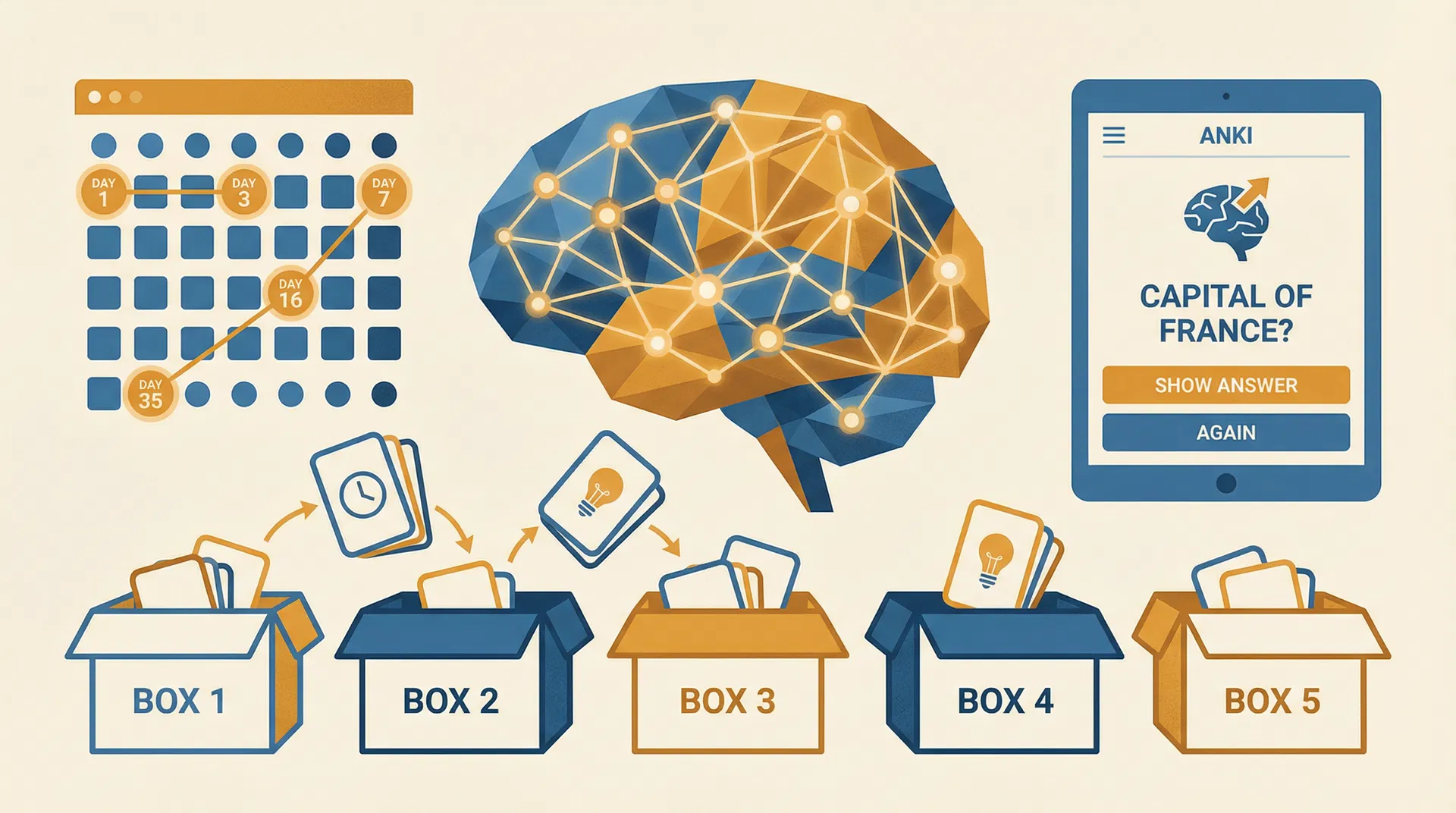
Spaced Repetition und Karteikarten: Die wissenschaftlich bewiesene Lernmethode für die Meisterprüfung
Du steckst mitten in der Vorbereitung auf deine Meisterprüfung und die schiere Menge an Lernstoff fühlt sich überwältigend an? Lerne, wie du mit Spaced Repetition dein Wissen nachhaltig verankerst.
Read more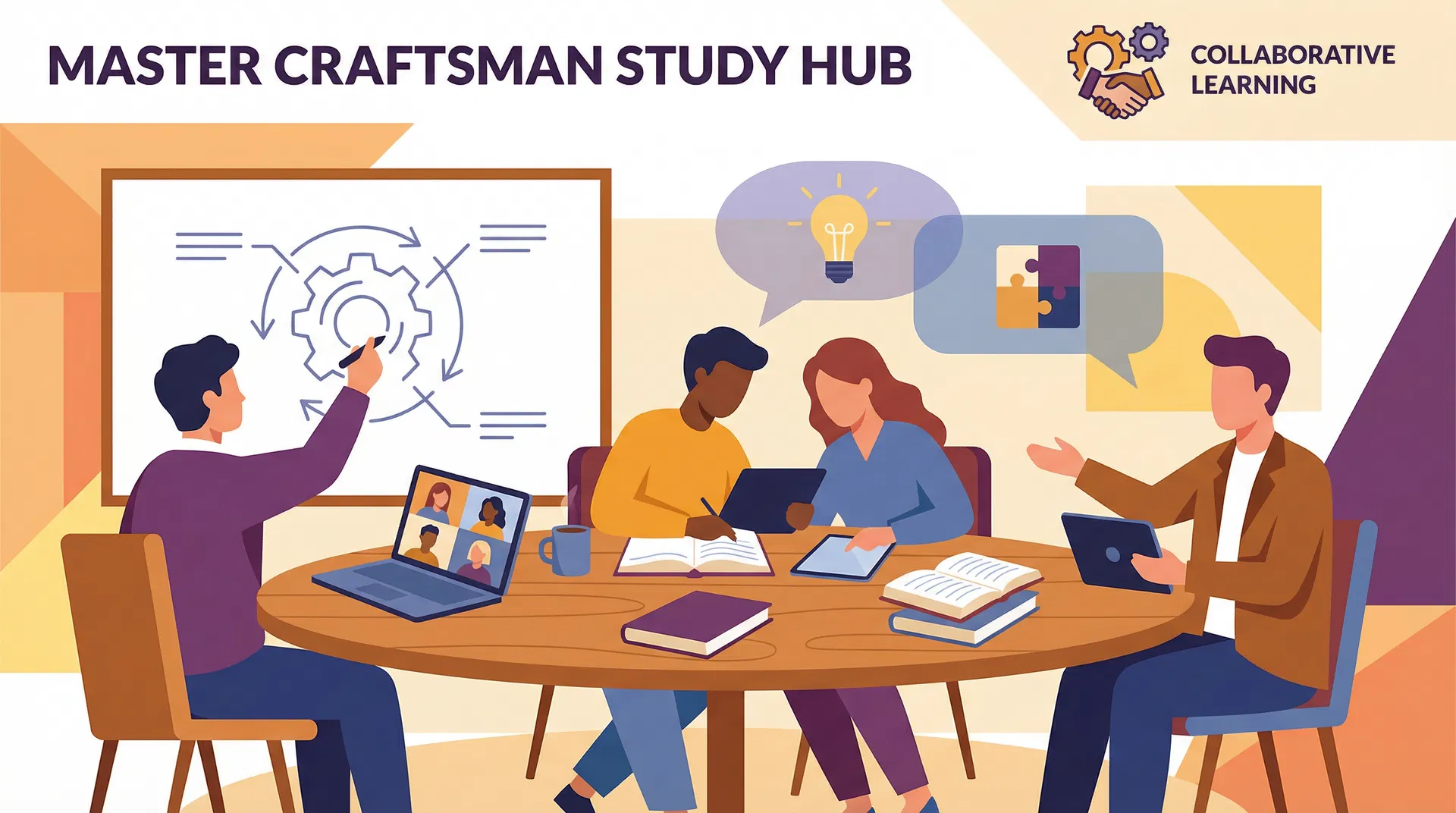
Lerngruppen für die Meisterprüfung: So findest und organisierst du die perfekte Gruppe
Der Weg zum Meistertitel ist anspruchsvoll. Eine Lerngruppe kann der Schlüssel zum Erfolg sein. Wir zeigen dir, wie du die perfekte Gruppe findest und organisierst.
Read more
Digitales Lernen vs. Präsenzkurs: Was ist besser für die Meisterprüfung?
Digitales Lernen oder Präsenzkurs für die Meisterprüfung? Wir vergleichen Kosten, Flexibilität und Erfolgschancen, damit Sie die beste Entscheidung treffen.
Read more