
Digital Learning vs. Classroom Course: Which is Better for the Master Craftsman Exam?
The decision to pursue a master craftsman certification is a big step in your career. But with this decision comes another, equally important question: How do you best prepare for it? The traditional master craftsman school with in-person classes has been valid for decades, but digitalization has opened up entirely new avenues. Online courses and digital learning platforms promise more flexibility and efficiency. But what is truly the better choice for aspiring master craftsmen? Digital learning or the traditional classroom course?
In this article, we will highlight the pros and cons of both learning formats, compare the costs, flexibility, and potential chances of success. We will look at which method is suitable for which type of learner, introduce hybrid models, and provide concrete practical examples. This way, you can make an informed decision that perfectly suits your life, your learning style, and your goals.
Digital Learning: The Future of Continuing Education?
Digital learning, often referred to as e-learning, has evolved in recent years from a niche solution to an established form of continuing education. For the demanding preparation for the master craftsman exam, this approach offers a number of compelling advantages, but also brings specific challenges.
The Advantages of Digital Learning
-
Maximum Flexibility: Probably the biggest advantage is independence from location and time. Whether early in the morning before work, during lunch break, or on the weekend – you decide when and where you learn. This model is ideal for anyone who needs to balance work, family, and continuing education. You save long travel times and can optimally integrate learning phases into your daily routine.
-
Individual Learning Pace: Everyone learns differently. While in a classroom course the pace is dictated by the group, online you can work at your own speed. You can repeat complex topics as often as necessary and simply skip familiar content. Platforms like meister.jetzt [blocked] allow you to track your learning progress precisely and work specifically on your weaknesses.
-
Cost Savings: Online courses are often cheaper than their in-person counterparts. Not only are direct costs for travel, food, and possible accommodation eliminated, but the course fees themselves are often lower. A sample calculation shows that travel costs alone for a classroom course can quickly exceed €1,800 [1].
-
Modern and Diverse Learning Methods: Good online platforms use the full range of digital media. Learning videos, interactive quizzes, simulations, podcasts, and digital scripts appeal to different learning types and ensure a varied learning experience. This demonstrably promotes learning transfer and motivation.
The Disadvantages and How to Overcome Them
-
High Self-Discipline Required: The great freedom of digital learning requires a high degree of personal responsibility and discipline. Without fixed appointments and the social pressure of a group, it can be difficult to motivate yourself to study regularly. Tip: Create a fixed study plan, set realistic weekly goals, and block out fixed study times in your calendar – treat these appointments like important meetings.
-
Less Direct Exchange: Spontaneous chats with fellow students during breaks or quick questions to the lecturer after class are eliminated. Even if good online offerings provide forums, live webinars, and direct contact options with tutors, the interaction is different. Tip: Actively use the communication channels offered! Participate in forum discussions, form digital study groups, and don't hesitate to contact your lecturers directly.
-
Technical Hurdles: A stable internet connection and a suitable device (PC, laptop, or tablet) are basic requirements. Not everyone is technically savvy or has the optimal equipment at home. Tip: Test the demo versions of providers in advance, such as the free trial access at meister.jetzt [blocked], to ensure that the technology works for you.
The Classroom Course: Proven and Personal
The classroom course is the traditional path to the master craftsman title. It relies on a fixed structure, direct exchange, and a clear separation between learning and leisure. For many aspiring master craftsmen, this is precisely the key to success.
The Advantages of the Classroom Course
-
Fixed Structure and Social Pressure: Fixed class times and mandatory attendance create a clear framework and a commitment that helps many learners stay on track. The social pressure of the group can be a strong motivator.
-
Direct and Personal Exchange: Direct contact with lecturers and fellow students is an invaluable advantage. Questions can be clarified immediately, complex issues can be worked out in dialogue, and networks for the future can be built. Group dynamics promote the learning effect and collegial cohesion.
-
No Technical Hurdles: You don't have to worry about internet connection, software updates, or device compatibility. The focus is 100% on the learning content.
-
Clear Separation of Everyday Life and Learning: The journey to the master craftsman school creates a mental distance from work and private life. The learning location is clearly defined, which can promote concentration.
The Disadvantages of the Classroom Course
-
High Costs: Classroom courses are generally the more expensive option. In addition to the often higher course fees, there are significant additional costs for daily commutes, food, and, for block instruction, accommodation. The total costs can quickly reach a five-figure sum.
-
Low Flexibility: Fixed course times, a fixed location – the classroom course dictates your schedule. This makes it challenging to reconcile with a demanding job or family obligations. Vacation days must be sacrificed for classes, and anyone who misses a class has to catch up on the material themselves.
-
Dependence on Group Dynamics: The learning pace is determined by the entire group. If you are faster, you might get bored. If you need more time, you might feel pressured. The composition of the group and the quality of the lecturers are also factors that you cannot influence.
Cost Comparison: What Does the Master Craftsman Exam Really Cost?
The financial burden is a crucial factor in choosing the right course format. The following table provides a rough overview of the expected costs. Please note that these are average values and can vary greatly depending on the provider and region.
| Cost Item | Classroom Course | Online Course |
|---|---|---|
| Course Fees | €5,500 - €8,000 | €4,500 - €7,000 |
| Exam Fees (Chamber of Commerce) | approx. €780 | approx. €780 |
| Learning Materials | €250 - €300 | Often included |
| Travel Costs | €1,500 - €2,500 | €0 |
| Food/Accommodation | €500 - €3,000 | €0 |
| Loss of Earnings | Possible (for full-time) | Lower |
| Total Costs (estimated) | €8,530 - €14,580 | €5,280 - €7,780 |
Source: Own estimate based on data from IM-Campus [1] and other providers. The exact prices [blocked] for meister.jetzt can be found on our website.
It becomes clear that online courses offer significant savings potential. However, do not forget to check for state funding such as the Aufstiegs-BAföG, which can be applied for both course formats.
Flexibility vs. Structure: What Type of Learner Are You?
The choice between digital and in-person largely depends on your personality and learning style. Take the test:
- Self-discipline: Can you motivate yourself and learn in a structured way, even without a fixed schedule? (→ Rather Online)
- Social exchange: Is direct contact and networking with colleagues and lecturers very important to you? (→ Rather In-person)
- Flexibility in everyday life: Do you need to flexibly juggle work, family, and learning? (→ Rather Online)
- Tech affinity: Do you feel confident in using digital media? (→ Rather Online)
- Learning pace: Do you prefer to learn at your own pace? (→ Rather Online)
- Structure: Do you need a fixed framework and deadlines to stay on track? (→ Rather In-person)
Pass Rates: Does One Path Lead More to Success?
A frequently asked question is whether the pass rates for online courses can keep up with those of classroom courses. Reliable, nationwide statistics that make a clear distinction here are rare. Success depends less on the format than on the quality of the provider and the engagement of the participant.
Modern online platforms like meister.jetzt rely on didactically high-quality concepts that specifically promote learning success. These include:
- Regular knowledge checks and mock exams [blocked]
- Direct support from experienced lecturers
- An active community for exchange
Ultimately, the form of learning is only the framework. What matters is how you use this framework for yourself.
Hybrid Models: The Best of Both Worlds?
Hybrid or blended learning models are increasingly establishing themselves as a compromise. They combine the flexibility of online learning phases with targeted in-person appointments. This can look like this:
- Theoretical instruction mainly takes place online.
- Practical workshops, exam preparations, or laboratory exercises are conducted on weekends or in block weeks on-site.
This model attempts to compensate for the disadvantages of the respective pure forms. It offers flexibility but still allows for important personal exchange and practical application. However, proportionate travel and accommodation costs may again arise here.
FAQ – Frequently Asked Questions
1. How long does it take to prepare for the master craftsman exam on average? The duration
Tags:
Read more
Other articles that might interest you
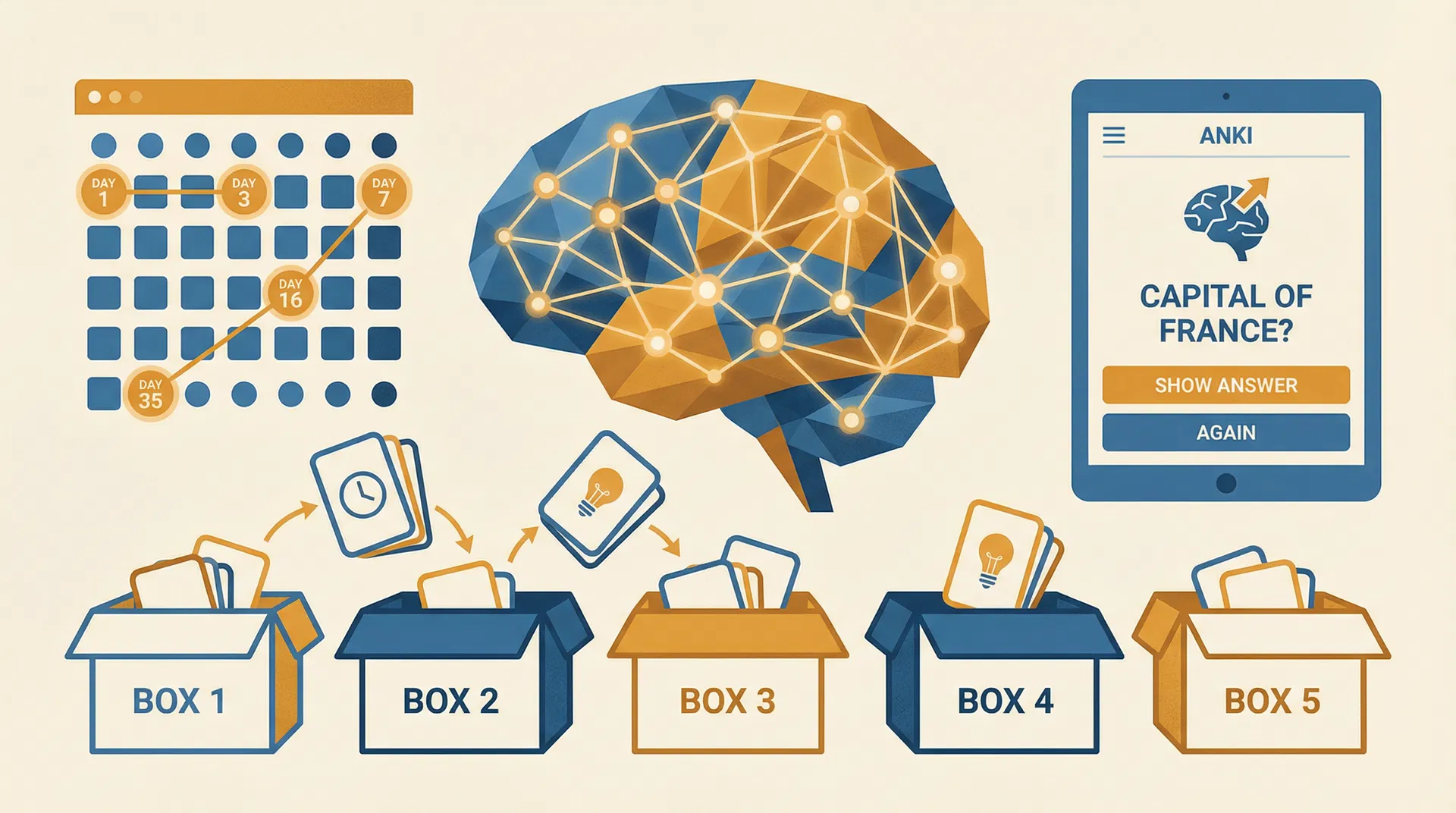
Spaced Repetition und Karteikarten: Die wissenschaftlich bewiesene Lernmethode für die Meisterprüfung
Du steckst mitten in der Vorbereitung auf deine Meisterprüfung und die schiere Menge an Lernstoff fühlt sich überwältigend an? Lerne, wie du mit Spaced Repetition dein Wissen nachhaltig verankerst.
Read more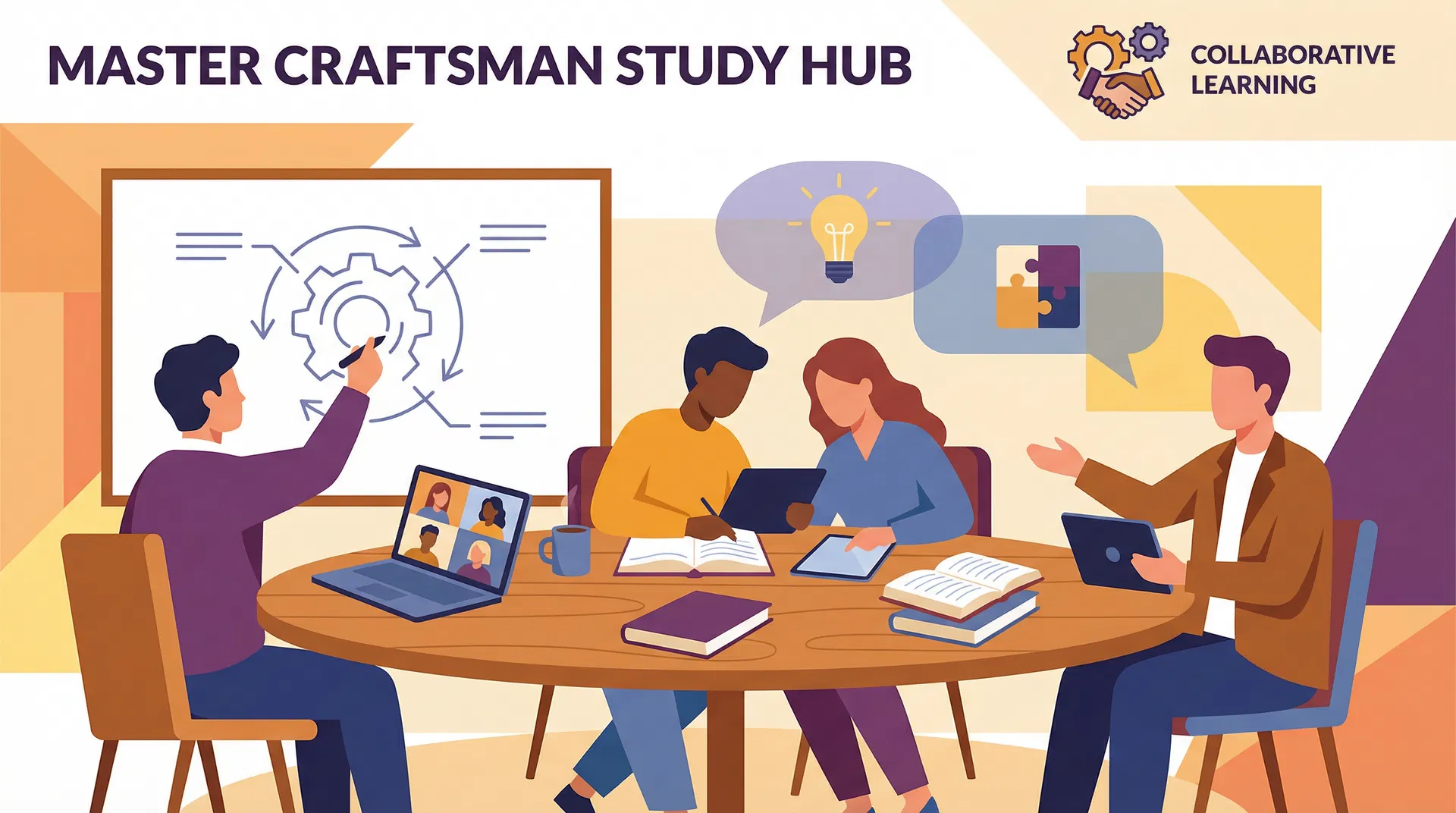
Lerngruppen für die Meisterprüfung: So findest und organisierst du die perfekte Gruppe
Der Weg zum Meistertitel ist anspruchsvoll. Eine Lerngruppe kann der Schlüssel zum Erfolg sein. Wir zeigen dir, wie du die perfekte Gruppe findest und organisierst.
Read more
Prüfungsangst überwinden: 4 mentale Strategien für die Meisterprüfung
Prüfungsangst vor der Meisterprüfung? Entdecken Sie 4 praxiserprobte mentale Strategien von Atemtechniken bis Zeitmanagement, um die Prüfung souverän zu meistern.
Read more