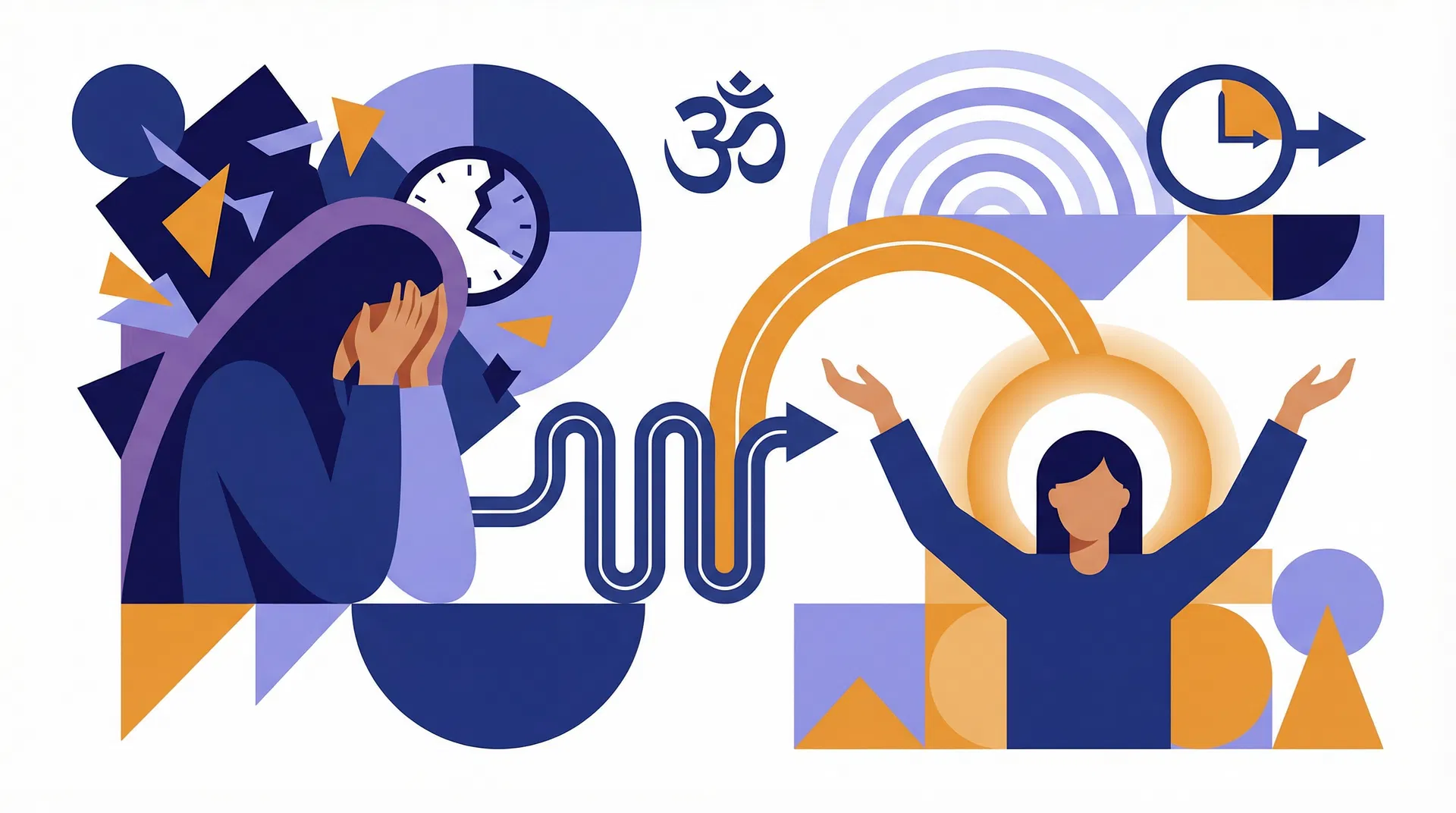
The Invisible Hurdle: What is Exam Anxiety and Why Does It Affect Aspiring Masters in Particular?
Do you know the feeling? Your hands get sweaty, your heart starts racing, and the carefully learned content seems to vanish from your memory as if by magic. This phenomenon, known as exam anxiety, is far more than just a little nervousness. It is an intense stress reaction that affects body and mind and can severely impair performance. Studies show that up to 40% of all students suffer from severe exam anxiety, and for demanding further education such as the master craftsman's examination, the true number is likely even higher. Because here it's not just about another grade on a certificate – it's about a decisive career step, financial investments, and the fulfillment of a personal life dream.
The pressure on aspiring masters is immense. Often, preparation is squeezed in alongside work and family obligations. The expectations of employers, family, and not least oneself are enormous. One invests not only countless hours in learning [blocked], but also a lot of money in preparatory courses. Failure seems unthinkable. This combination of high stakes and high potential for failure is the perfect breeding ground for exam anxiety. It manifests not only in the days before the exam but can already lead to sleep disturbances, concentration problems, and permanent tension weeks and months beforehand. But the good news is: you are not helplessly at the mercy of this fear. With the right mental strategies, you can regain control and perform at your best exactly when it matters most.
Your Mental Toolbox: 4 Proven Strategies Against Anxiety
Exam anxiety is an surmountable obstacle. Consider the following techniques as your personal toolbox, from which you can draw depending on the situation. It's not about completely eliminating anxiety – a certain degree of tension (eustress) can even be performance-enhancing. The goal is to transform paralyzing panic (distress) into focused energy.
1. The Power of Breath: How to Instantly Calm Down with Simple Breathing Techniques
When panic rises, your breath is your most direct link to the autonomic nervous system. Conscious, deep breathing signals to your body that there is no acute danger and initiates the transition from "fight-or-flight mode" to a state of relaxation. Two particularly effective techniques are 4-7-8 breathing and box breathing.
The 4-7-8 Breathing Technique:
- Exhale completely through your mouth, making a soft "whoosh" sound.
- Close your mouth and inhale quietly through your nose while counting to four internally.
- Hold your breath and count to seven.
- Exhale completely and slowly through your mouth while counting to eight.
- Repeat this cycle three to four times.
Box Breathing: This technique is even used by Navy SEALs for stress regulation. Imagine a square.
- Inhale (4 seconds): Inhale slowly and deeply through your nose, imagining the first side of the square.
- Hold breath (4 seconds): Hold your breath as you move along the second side of the square.
- Exhale (4 seconds): Exhale slowly and completely through your mouth, visualizing the third side.
- Hold breath (4 seconds): Hold your breath again before starting the cycle from the beginning with the fourth side of the square.
Practice these exercises regularly during your preparation period so that they become an automatic reaction in the exam situation. Even a few minutes a day can make a significant difference.
2. Success in Mind: Visualization as a Key to Exam Success
Top athletes do it, managers do it, and you can benefit from it too: visualizing success. With this mental training technique, you imagine the desired process and the positive outcome as detailed and vividly as possible. The brain can hardly distinguish between a real and an intensely imagined experience. By repeatedly "experiencing" exam success, you build neural pathways that give you security and self-confidence in the real situation.
Instructions for Success Visualization:
- Create a calm atmosphere: Find a place where you won't be disturbed. Close your eyes and relax with a few deep breaths.
- Imagine the entire process: Don't just start with the cheering after passing the exam. Visualize the entire day: how you wake up calm and confident in the morning, have a relaxed breakfast, and make your way to the exam location. Imagine entering the exam room, taking your seat, and spreading out your materials.
- Experience the exam situation positively: Visualize how you concentratedly read through the tasks and immediately have initial solution approaches in your head. Feel the calm and clarity with which you answer the questions. See in your mind's eye how you have perfect control over your time and even have time left for a review at the end.
- Feel the success: Imagine the moment you put down your pen – with the deep feeling of having given your best. Feel the relief and pride. Picture receiving the positive result weeks later and how this news affects your life.
The more senses you involve in your visualization (What do you see? What do you hear? What do you feel?), the stronger the effect. This technique is not esoteric hocus-pocus but a scientifically sound method for strengthening self-confidence and reducing anxiety.
3. The Roadmap to Success: Confident Time Management in the Exam
A major reason for panic during an exam is the fear of not finishing on time. Strategic time management is therefore not only a matter of efficiency but also a powerful tool against exam anxiety. Never go into an exam without a plan. Familiarize yourself with the format of the mock exam [blocked] beforehand and develop a strategy.
Strategies for Confident Time Management:
- Get an overview: Take 5-10 minutes at the beginning of the exam to skim all tasks. Identify the tasks that you find easy and estimate the time required for each.
- Points per minute: Divide the total score by the available time (minus your buffer). This gives you a guideline for how many minutes you should invest per point. A 10-point task in a 180-minute exam with 100 points should therefore not take more than approx. 15-18 minutes.
- Start with the easy tasks: This not only gives you quick initial points but also an important psychological advantage. Early successes boost self-confidence and reduce stress.
- Plan for buffers: Never plan for the full time. A buffer of 15-20% of the total time (e.g., about 30 minutes for 180 minutes) is ideal for cushioning unforeseen difficulties with individual tasks and for calmly reviewing everything at the end.
| Phase | Time (for 180 min.) | Activity |
|---|---|---|
| 1. Orientation | 10 minutes | Read all tasks completely, assess difficulty, create a mental time plan. |
| 2. Processing (easy tasks) | 60 minutes | Solve tasks you feel confident about to gain points and self-confidence. |
| 3. Processing (difficult tasks) | 80 minutes | Concentrated work on the more challenging tasks. If blocked: mark the task and move on to the next. |
| 4. Review & Buffer | 30 minutes | Check all answers, correct careless mistakes, complete open points for blocked tasks. |
This plan is a suggestion. Adapt it to your personal working style. Just knowing you have a plan is immensely calming.
4. Stress as a Motivator: How to Transform Exam Stress into Positive Energy
Stress is not inherently bad. The Austrian-Canadian physician Hans Selye already distinguished between eustress (positive stress that drives us and enables peak performance) and distress (negative stress that paralyzes and causes illness). The goal is not to live a stress-free life, but to learn to transform distress into eustress. In exam preparation, this means seeing the tension as a sign that this exam is important to you and channeling that energy.
Methods for Stress Transformation:
- Perspective shift: Don't say "I'm afraid of the exam," but "I'm excited and full of energy to show what I can do." This reframing can change the emotional reaction to physical symptoms.
- Physical activity: Reduce stress hormones like cortisol through regular exercise. A 20-minute walk in the fresh air can often do more than another hour of desperate cramming.
- Conscious breaks: The brain cannot absorb information for hours on end. Plan regular breaks (e.g., using the Pomodoro Technique: 25 minutes of study, 5 minutes of break) and do something during this time that has nothing to do with the study material.
- Nutrition and sleep: Never underestimate the basics. Sufficient sleep (7-8 hours) is essential for memory consolidation. A balanced diet with complex carbohydrates, healthy fats, and proteins ensures stable energy levels, while sugar and caffeine can increase nervousness.
From Practice: How Maria Conquered Her Exam Anxiety
Maria, an aspiring industrial master, was about to take her basic qualification exam. During the day, she worked as a shift supervisor; in the evenings and on weekends, she studied hard. The closer the exam date got, the stronger her anxiety became. "I felt like I had a huge wall in front of me," she says. "At night, I lay awake, constantly going through the worst-case scenarios in my head." A colleague recommended the platform meister.jetzt [blocked]. At first, she was skeptical,
Tags:
Read more
Other articles that might interest you
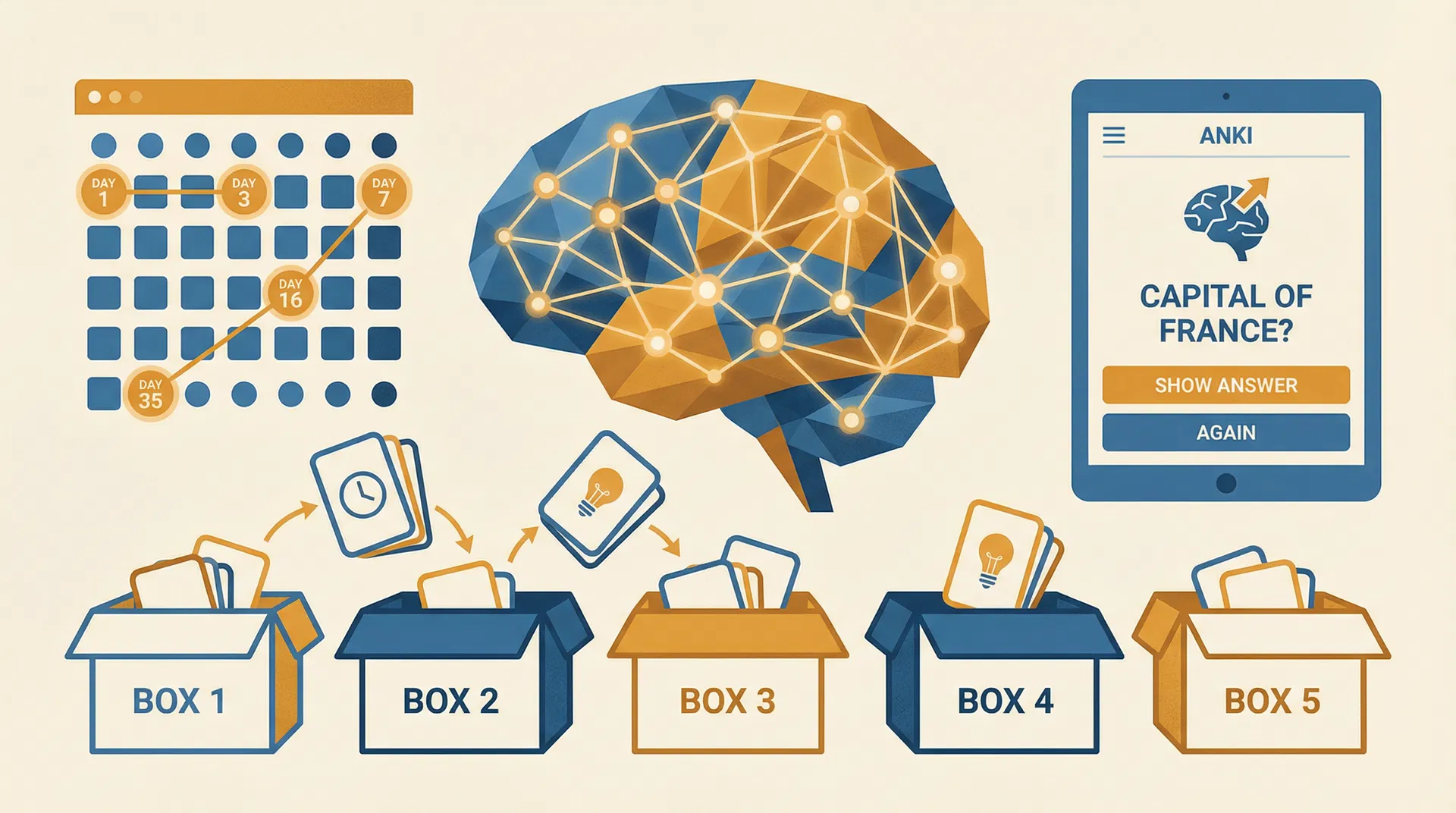
Spaced Repetition und Karteikarten: Die wissenschaftlich bewiesene Lernmethode für die Meisterprüfung
Du steckst mitten in der Vorbereitung auf deine Meisterprüfung und die schiere Menge an Lernstoff fühlt sich überwältigend an? Lerne, wie du mit Spaced Repetition dein Wissen nachhaltig verankerst.
Read more
Lerngruppen für die Meisterprüfung: So findest und organisierst du die perfekte Gruppe
Der Weg zum Meistertitel ist anspruchsvoll. Eine Lerngruppe kann der Schlüssel zum Erfolg sein. Wir zeigen dir, wie du die perfekte Gruppe findest und organisierst.
Read more
Digitales Lernen vs. Präsenzkurs: Was ist besser für die Meisterprüfung?
Digitales Lernen oder Präsenzkurs für die Meisterprüfung? Wir vergleichen Kosten, Flexibilität und Erfolgschancen, damit Sie die beste Entscheidung treffen.
Read more